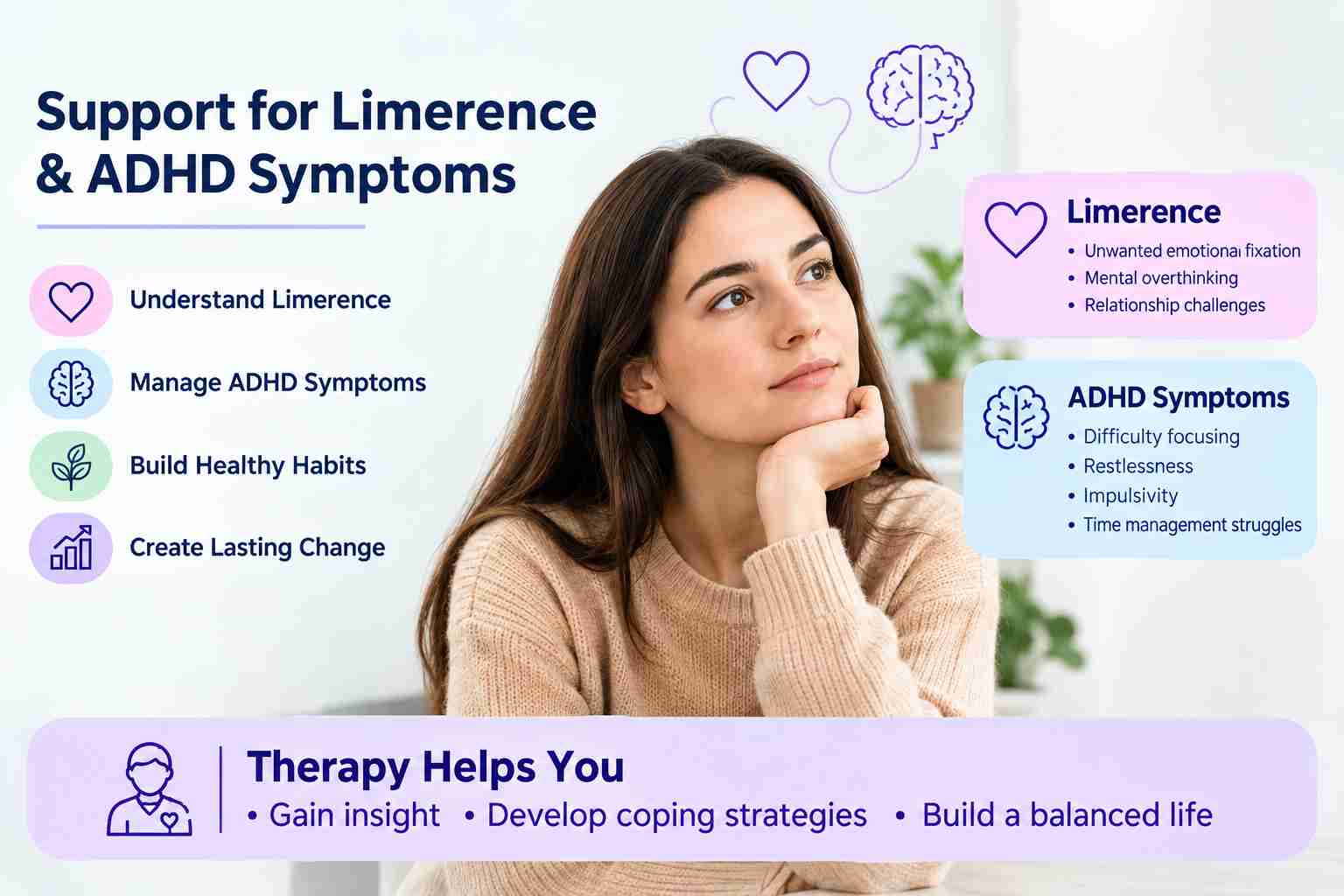
Limerence is an intense and often involuntary preoccupation with another person. It can involve intrusive thoughts, idealization, a strong desire for reciprocation, and emotional highs and lows based on another person’s attention.
When someone also has attention-deficit/hyperactivity disorder (ADHD), difficulties with shifting attention, impulsivity and emotional regulation may make romantic preoccupation especially challenging. However, research has not established that people with ADHD experience limerence more frequently than people without ADHD.
Understanding the possible overlap can still help someone recognize the pattern, reduce shame and regain a greater sense of control.
Limerence is more consuming than an ordinary crush. Someone may think repeatedly about another person, idealize them without knowing them deeply, check constantly for messages and analyze small interactions for signs of interest or rejection.
Uncertainty often sustains the pattern. A warm message can create excitement and relief, while silence or distance may lead to anxiety, disappointment and a renewed search for reassurance.
Not every intense attraction is limerence. Early romantic interest naturally involves excitement, curiosity and increased attention. It becomes concerning when the preoccupation interferes with work, sleep, friendships or daily responsibilities, or contributes to difficulty respecting another person’s boundaries.
Limerence is not a formal mental-health diagnosis, but the distress and impairment associated with it can be significant.
The connection between ADHD and limerence is widely discussed online, but direct scientific research remains limited. We cannot conclude that ADHD causes limerence or that people with ADHD experience it more often, more intensely or for longer periods.
There are, however, some possible areas of overlap. ADHD can involve difficulty shifting attention, regulating strong emotions and pausing before acting on impulses. Some people with ADHD also describe becoming deeply absorbed in experiences that feel novel, stimulating or emotionally meaningful.
A new romantic interest can provide novelty, anticipation and uncertainty. For some individuals, this combination may capture attention powerfully. Once attention becomes centred on another person, redirecting it toward work, friendships or other priorities may become difficult.
ADHD may be one contributing factor, but it should not automatically be treated as the cause. Attachment patterns, loneliness, relationship history, anxiety, stress and rumination may also contribute. People without ADHD can experience limerence, and many people with ADHD never do.
The early stage of romantic attraction can be exhilarating. Novelty, anticipation and growing emotional or physical intimacy can create powerful feelings of connection. These feelings are real, but intensity alone does not tell us whether a relationship is compatible, secure or sustainable.
Some people learn to associate love primarily with the excitement of falling in love. When a relationship becomes calmer and more familiar, they may interpret that change as boredom, lost chemistry or evidence that they are no longer in love. They may then become drawn toward a new person or an uncertain relationship that recreates the intensity of the beginning.
Inconsistent attention can make this pattern particularly compelling. A message or affectionate interaction may produce temporary excitement and relief. Distance or silence then creates uncertainty and longing. Because the reward is unpredictable, the person may become increasingly preoccupied with obtaining it. The intensity of that pursuit can be mistaken for the depth of the relationship.
Therapy can help someone distinguish between attraction and compatibility, intensity and intimacy, and idealization and genuinely knowing another person. Healthy long-term love may become less novel, but it does not have to become less meaningful. It develops through consistency, trust, reciprocity and emotional safety.
Limerence can sometimes be connected to attachment insecurity, fear of abandonment or a strong need for reassurance. The imagined relationship may represent acceptance, safety, excitement, validation or the hope of repairing an earlier relational wound.
Attachment-based therapy can help clients understand these patterns, develop greater internal security and build relationships based on mutuality rather than uncertainty and idealization. This does not mean every experience of limerence comes from childhood or trauma. Treatment must be based on the individual’s history and needs.
Limerence can also resemble a compulsive reward cycle. Checking a phone, receiving a message or noticing a sign of interest may provide temporary relief. That relief reinforces the urge to check again.
When this pattern resembles compulsive or addictive behaviour, therapy can help clients recognize triggers, tolerate urges, interrupt reinforcing behaviours and develop healthier sources of connection, meaning and reward.
Although limerence does not have one standardized treatment protocol, the psychological processes that can maintain it are familiar and treatable.
Therapy may help clients:
When ADHD is present, appropriate treatment may improve attention regulation, impulsivity, emotional regulation and daily functioning. ADHD treatment is not a direct cure for limerence, but it may strengthen the person’s ability to recognize the pattern and respond differently.
The goal is not simply to force someone to stop thinking about another person. It is to understand what gives the preoccupation its emotional power and help the individual regain choice.
At NewVista Psychology, therapy begins with understanding the individual rather than reducing the experience to a label or character flaw.
Our Calgary therapists can help clients explore whether the pattern is connected to ADHD-related challenges, attachment insecurity, anxiety, loneliness, relationship experiences or other concerns.
Treatment may include attachment-based therapy, strategies for managing rumination and compulsive behaviours, emotional-regulation skills, boundary work and treatment for ADHD or other contributing concerns. The aim is to help clients develop greater internal security and build relationships grounded in reciprocity and reality.
NewVista Psychology offers in-person therapy in Calgary and virtual counselling throughout Alberta.
Limerence can feel overwhelming when thoughts about another person begin affecting concentration, relationships or self-esteem.
Although research has not established that ADHD causes limerence, certain ADHD-related experiences may make romantic preoccupation more difficult to manage for some people. Attachment patterns, reward cycles and beliefs about love may also play a role.
If this pattern is causing distress or interfering with daily life, therapy can help. Change begins by understanding what maintains the preoccupation and learning how to respond with greater awareness, flexibility and choice.
What is limerence, and how is it different from a normal crush?
Limerence is an intense and involuntary romantic preoccupation involving intrusive thoughts, idealization and emotional highs and lows connected to another person’s attention. It is generally more consuming and disruptive than a typical crush.
Are people with ADHD more likely to experience limerence?
Current research has not established that people with ADHD experience limerence more frequently. However, difficulty shifting attention, impulsivity and emotional dysregulation may make romantic preoccupation particularly challenging for some individuals with ADHD.
Can someone mistake limerence for love?
Yes. Novelty, uncertainty and longing can create intense emotions that may be interpreted as proof of love. Therapy can help distinguish emotional intensity from intimacy, compatibility and mutual connection.
Can attachment-based therapy help with limerence?
Attachment-based therapy may help when limerence is connected to insecurity, fear of abandonment or a strong need for reassurance. Treatment should be tailored to the individual rather than assuming attachment is always the cause.